Our Vision
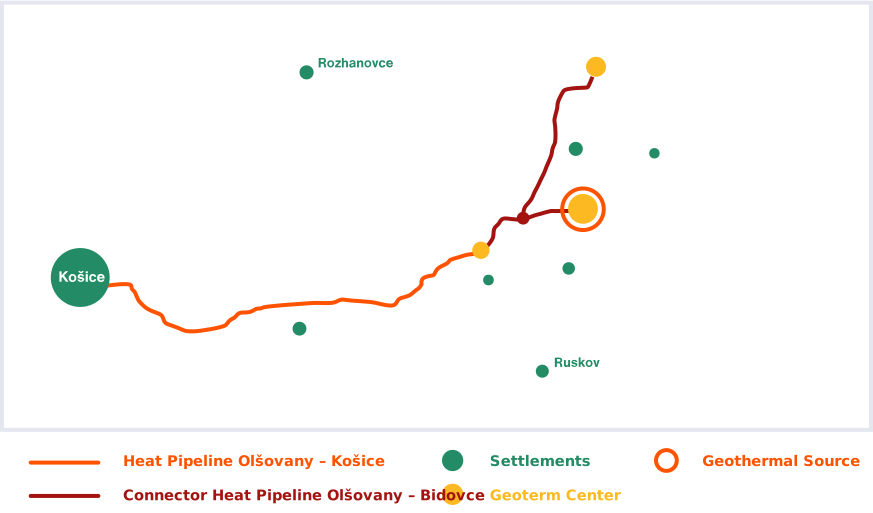
Heat from the geothermal source will be delivered to Košice starting 2026.
From 2030, the energy supply to Košice will be doubled. By this time, an additional three deep wells for production and reinjection of geothermal water will have been constructed.
Expected geothermal:
2026 — 15 MW
2027 — 23 MW
2030 — 30 MW
By then, it will be necessary to build:
- approximately 20 kilometres of heat pipeline connecting the geothermal wells and TEKO,
- a heat exchange station where geothermal energy is handed over to the secondary working fluid that will deliver the heat to Košice,
- an operations control/dispatching centre,
- a cooling system ensuring that the geothermal water can be reinjected to underground.

In the neighborhood of the geothermal wells in Ďurkov, near the city of Košice, there are major industrial air polluters with a significant impact on the local environment.
Among the top ten largest CO2 emitters in Slovakia are companies such as U. S. Steel, s.r.o., Ferroenergy, s.r.o., and the Turňa nad Bodvou Cement Plant.
Of the total CO2 emissions produced by industry and energy in Slovakia in 2019 (19.785 million tonnes), nearly 47 percent were generated within a radius of fifty kilometres from the geothermal wells in Ďurkov.
Largest emitters within 50 kilometers in 2019, byCO2 production
— U.S. Steel, s.r.o.
— Ferroenergy, s.r.o.
— Carmeuse Slovakia, s.r.o.
— Cementáreň Turňa nad Bodvou.
— CRH Slovensko, a.s.
— Tepláreň Košice (TEKO), a.s.
— Slovenské elektrárne, a.s. Elektráreň Vojany
— Bukóza Energo + Bukocel, a.s.
The Durkovsko-Svinická hydrogeothermal structure covers an area of approximately 33,6 km2